

Turnkey relocation to Spain from 6 weeks

 06/06/2025
 Reading time: 12 min
Life in Spain: Everything You Need to Know Before Moving

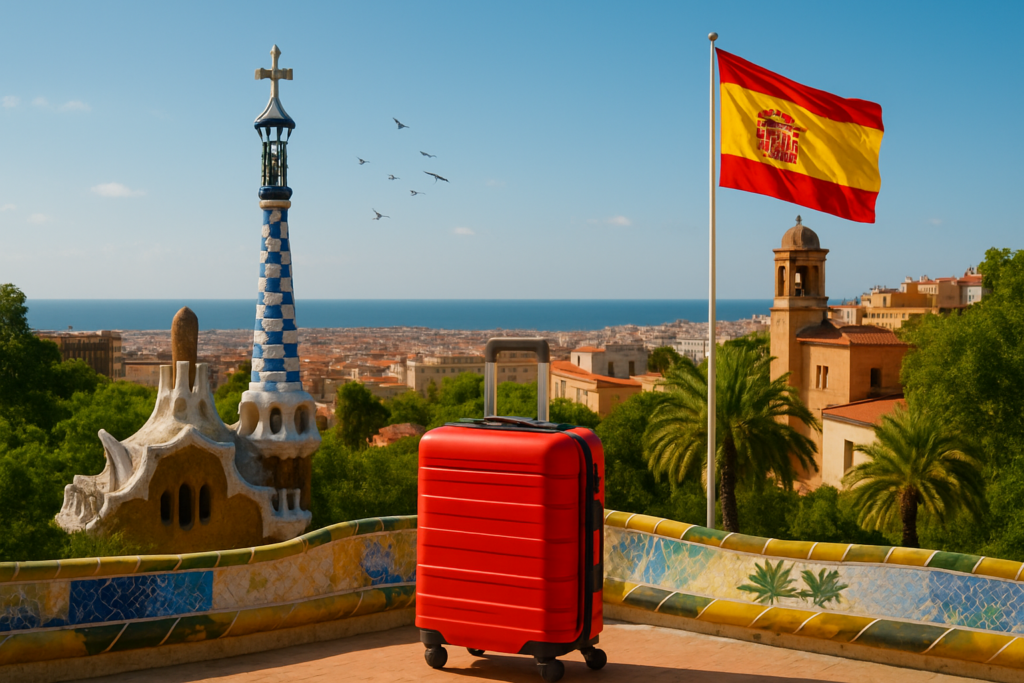
Let’s look at the pros and cons of living in Spain so you can make an informed decision about relocating.
Legal Ways to Move to Spain
Spanish law offers five main paths for relocation: residence permits for living, working, business, studying, or family reunification. Before reviewing these options, it’s important to consider the advantages and disadvantages of life in Spain to make a well-informed choice.
Types of Residence Permits and Application Requirements
Before moving, it’s crucial to know that residence permits in Spain are tied to your purpose (work, study, investment) and require careful preparation of documents (with apostille and translation). Processing times vary by type — from 20 days for the Nomad Visa to up to 3 months for a startup work permit.
There are 5 main types of residence permits:
- Work Residence Permit (Residencia y Trabajo) – granted when you’ve secured a job in Spain. A work contract and proof of qualifications are required; in some cases, you must also show that there are no EU candidates for the position. It’s issued for the duration of the contract and processed within up to 3 months.
- Business Residence (Startup) (Residencia para Emprendedores) – for entrepreneurs with a project. You’ll need a business plan, sufficient funds in your account, and proof that your project benefits the economy. It’s granted for 3 years and can be renewed if the business is successful.
- Student Permit (Estancia por Estudios) – for university or course students. You need an invitation from the institution, proof of tuition payment, and at least €600 per month for living expenses. The permit is valid for the duration of the studies. Starting in 2025, renewal for language courses will require passing the DELE/SIELE exam.
- Family Reunification (Reagrupación Familiar) – for spouses, children, or parents of a Spanish resident. You’ll need proof of family ties and sufficient income from the resident. The permit duration matches the sponsor's residence permit. Processing time depends on the type.
- Non-Lucrative Visa (No Lucrativa) – this residence doesn’t allow employment in Spain. It’s issued for one year, renewable for two more. Applications are submitted via consulates, and proof of savings of at least €28,800 per year is required for the main applicant.
All types require a valid passport, a criminal background check, and a bank statement.
Non-Lucrative Visa
The Non-Lucrative Visa is ideal for those who want to enjoy life in Spain without working — perfect for retirees or individuals with passive income from rentals or investments.
To qualify, you must show sufficient financial means. As of 2025, the minimum is €2,400 per month for the main applicant, plus €600 for each dependent. This demonstrates that you can support yourself without employment in Spain.
Applications are submitted in person at the visa center, and processing takes about 3 months. The visa is initially valid for 90 days, during which you must travel to Spain and apply for a resident card (TIE). You must reside in Spain for at least 183 days per year to maintain your status.
Although you cannot work in Spain on this visa, you may travel freely within the Schengen Area. Initially granted for 1 year, it can be renewed for 2 years, and after 5 years, you may qualify for permanent residency.
Student Visa
If you plan to enroll in a Spanish university, take language courses, or pursue vocational training, the student visa is a great option. It allows you to study and is issued for the duration of the program (from 6 months to 4 years), renewable based on academic performance.
To apply, you must:
- Receive an official invitation from an educational institution.
- Pay the tuition fees.
- Provide proof of sufficient financial resources.
- Obtain health insurance.
After your studies, you can extend your stay. However, starting in 2025, to extend a student permit for language courses, you will need to pass the DELE/SIELE exam, and the extension will only be granted once.
Family Reunification
If you have a relative who is a legal resident of Spain and has lived there for at least one year with a valid residence permit, you may be eligible for family reunification. This option is available for spouses, dependent children, and parents.
To apply for family reunification, you must:
- Ensure the sponsor has lived in Spain for at least one year — verified through their residence permit and registration.
- Provide proof of family ties — marriage or birth certificates with apostille and official translation.
- Demonstrate sufficient income and housing — the requirements depend on the type of residence permit held by the sponsor.
Once approved, you will receive a residence permit with the same duration as your relative's and may be allowed to work or study, depending on the specific conditions.
Advantages of Living in Spain
Expats choose Spain for its mild climate, affordable education, and, of course, the national cuisine. Let’s explore the key benefits of life in Spain that attract foreigners from around the world.
Climate and Natural Environment
On the Mediterranean coast, in places like Costa del Sol or Costa Blanca (e.g., Alicante), the climate is mild and Mediterranean. Winters are warm — temperatures rarely fall below 10–15°C (50–59°F), and summers are hot yet comfortable, reaching 30–35°C (86–95°F) with a pleasant sea breeze.
Inland regions, such as Madrid or Zaragoza, have a continental climate with sharper temperature swings. In winter, temperatures often hover around 0°C (32°F) and can drop to -5°C (23°F). Snow is rare in Madrid, but the cold can be biting due to wind. In summer, temperatures can soar up to 40°C (104°F).
In the Pyrenees (north of Spain) and Sierra Nevada (near Granada), the climate is mountainous. Winters bring snow and temperatures down to -10°C (14°F), making these regions perfect for skiing. Sierra Nevada, for example, is one of Europe’s southernmost ski resorts, with a season lasting from December to April. A day pass costs around €40. In summer, the mountains offer a cool escape — 20–25°C (68–77°F), ideal for hiking and trekking.
Nature is one of Spain’s top draws. Beaches like Barceloneta in Barcelona or Marbella on the Costa del Sol feature golden sands and clean, Blue Flag-rated waters. Entry is free, and sunbeds start at €5/day. The lush green hills of Galicia in the north are perfect for solitude and walking, with forests, rivers, and fog creating a mystical atmosphere (but expect up to 150 rainy days per year).
Healthcare Quality
Public hospitals — such as Hospital Clínic in Barcelona or La Paz in Madrid — are free for those who hold a TSI (Tarjeta Sanitaria Individual). To get one, you must register with the Social Security system (Seguridad Social), which usually requires a residence permit and either an employment contract or self-employed (autónomo) status.
Without a TSI, all medical services are paid: a general consultation starts from €50, lab tests from €20, and a hospital stay can cost hundreds of euros per day. Obtaining a TSI should be one of your first steps after moving.
Private clinics (like Quirónsalud or Vithas) offer faster service: you can see a specialist in a week instead of a month. Consultations start at €50, MRIs at €200, and surgeries from €1,000. Many expats choose private health insurance (e.g., Sanitas, Adeslas) for €40–60/month — most plans cover almost everything, including dentistry, which isn’t included in the public system.
Education System
Public schools accept children from the age of 3, and education is compulsory until age 16. Instruction is in Spanish or Catalan, depending on the region.
Private schools cost from €300/month and often provide education entirely in English.
Spanish universities rank among the world’s top 100. Tuition fees start at €1,000/year for EU residents and from €3,000/year for non-residents.
Safety and Quality of Life
Spain is one of the safest countries in Europe. Its crime rate is three times lower than in Russia — about 22 crimes per 1,000 people compared to 60. The infrastructure is well-developed, public spaces are clean, and overall quality of life is high.
Food and Gastronomy
Spanish cuisine is love at first bite. Jamón, paella, tapas, fresh seafood, and olive oil are all available at reasonable prices, especially in local markets. Farmers’ produce is always fresh, and food festivals let you dive into the country’s rich culinary traditions.
Challenges and Adaptation Specifics
Even the most well-planned move to Spain comes with its share of hidden difficulties: language barriers, bureaucratic procedures, job hunting, and cultural differences. You need to take language and paperwork seriously — without them, adaptation becomes a constant source of stress, and even simple everyday tasks can turn into real challenges.
Language Barrier
Spanish is a must-have for living in Spain.
In tourist areas, English may help in cafés or hotels, but in real life — banks, hospitals, stores, or talking to neighbors — you won’t get far without Spanish.
Bureaucratic Procedures
Applying for a residence permit, obtaining a resident card (TIE), and registering at your place of residence can take from 1 to 6 months. Add to that extra visa checks due to geopolitical circumstances, long queues at the Extranjería (immigration office), and the need for perfectly prepared documents.
Job Search
As of 2025, the Spanish labor market is competitive: unemployment is around 12%, and without Spanish language skills, opportunities are limited. Key industries for expats include tourism, IT, education, and healthcare.
Cultural Mentality
Spaniards are friendly, relaxed, and famously unhurried. Siesta from 2 PM to 5 PM shuts down shops and offices, a 10:00 AM meeting might start at 10:20, and 9 PM dinners are completely normal.
Financial Aspects
Before moving, it's wise to review the cost of living, real estate prices, utility bills, and tax rates in different parts of the country.
Cost of Living by Region
Living in Spain typically costs between €1,000 and €1,500 per person per month, covering rent, food, transport, and leisure.
- Madrid and Barcelona: The most expensive cities. Renting a one-bedroom apartment in the city center costs €800–1,200. A monthly transit pass is around €55, and dining out adds another €200–300 monthly.
- Mid-sized cities (Valencia, Seville): More affordable. Central rent is around €500–700, public transport is about €35 per month, and food and daily expenses are lower.
- Northern regions (Galicia, Basque Country): Cheaper than the south, but winter heating adds €50–100 to your monthly bills.
- Tourist zones (Costa del Sol, Ibiza): In peak season (June–August), rent and service prices can rise by 20–30%.
Real Estate Prices
Housing costs vary by region and whether you buy or rent.
Buying:
- In major city centers (Madrid, Barcelona): €2,000–4,000 per m².
- In suburbs: €1,000–2,000 per m².
- Foreigners must obtain an NIE (Foreigner Identification Number) and pay a property transfer tax (around 10%).
Renting:
- One-bedroom apartment in the city center: €600–1,000 per month.
- Outside the city: €400–700.
- In tourist areas, rent can be 50% higher in summer.
Utility Costs
Monthly utility costs for two people average €100–150:
- Electricity: €40–60 (higher in summer due to A/C).
- Water: €20–30.
- Gas: €20–40 (for cooking and heating).
- Internet: €30–50 (fiber optics widely available).
- Heating: In colder regions, add €50–100 in winter.
Taxes and Fees
- Income tax: Progressive, up to 45% for annual incomes over €60,000.
- Property tax (IBI): 0.4–1.1% of the cadastral value.
- VAT (IVA): 21% on most goods and services.
- Non-resident tax: If you own property but live abroad, you must pay 24% tax on rental income.
Best Places for Russians to Live in Spain
Here are the most popular regions for Russians:
- Costa del Sol and Alicante – These coastal areas attract people with warm weather and beaches. Marbella and Torrevieja have many Russian families.
- Barcelona – A city for those seeking cultural diversity and career opportunities.
- Madrid – The capital offers a fast-paced lifestyle and broad opportunities; there is also a large Russian-speaking population here.
Each region is unique. Costa del Sol and Alicante are ideal for relaxation, Barcelona is best for culture and employment, and Madrid suits those with big ambitions.
Russian Communities
Russian-speaking communities in Spain help new immigrants adapt faster.
- Marbella: Home to the "Russian House," which hosts festivals, language courses, and offers legal consultations.
- Alicante: In Torrevieja, there are Russian associations, radio stations, and newspapers.
- Barcelona and Madrid: Large diasporas here organize meetups, workshops, and networking events for business contacts.
Infrastructure for Expats
Barcelona and Madrid offer schools with instruction in English or Russian. In major cities and coastal areas, you can find pediatricians and general practitioners who speak Russian.
Practical Tips for Moving
Document Preparation
To ensure a smooth relocation, prepare your documents in advance:
- Gather your passport, visa, and health insurance.
- Translate and apostille your birth and marriage certificates, diplomas — this must be done by sworn translators.
- Review the residency requirements for your specific visa type on the Ministerio de Inclusión website.
Finding Housing
Use websites like Idealista, Fotocasa, or Habitaclia: filter by neighborhood, price, and proximity to schools or public transport. You can also hire a real estate agent.
When renting, be prepared to pay a deposit (usually 1–2 months of rent).
Organizing the Move
Moving your belongings takes planning.
- Hire a moving company.
- Prepare customs paperwork: fill out a declaration and an itemized list of goods to bring them duty-free.
- Start the process 2–3 months in advance. Pack valuables in carry-on luggage and insure large items.
First Steps Upon Arrival
Once you arrive, take care of the basics:
- Register your address (empadronamiento): Visit your local town hall with your passport and rental agreement — it takes 1–2 days.
- Open a bank account at BBVA or Santander.
- Set up mobile service and internet.
- Find a doctor at your local clinic and enroll your children in school.
Conclusion
Spain offers Russians a comfortable climate, job opportunities, and supportive communities, but it also requires solid preparation. Expect bureaucratic hurdles (residency and TIE registration can take up to 3 months) and language barriers (without Spanish, it’s hard to find work). You can turn to a relocation company — they’ll handle the visas and registrations, leaving you to adapt to siestas and late-night dinners.